Processing time, response time, employee hours, and work completed.
ROI & results
Measure what changes in the business—not just what the technology can do.
Interactive establishes the baseline before implementation and tracks the operational and financial indicators that matter after launch.
Estimate your opportunity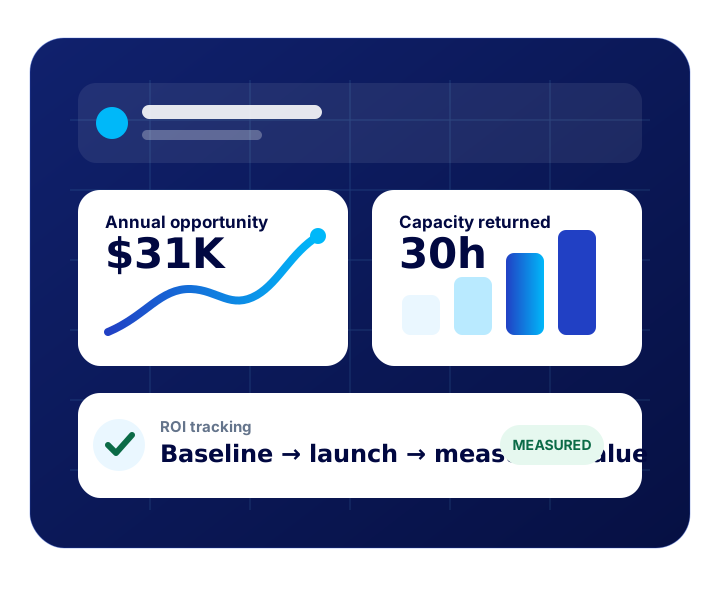
The measurement framework
Four dimensions of practical AI value.
Labor expense, rework, service cost, and avoided operating expense.
Error rates, consistency, completeness, escalation, and customer experience.
Lead response, capacity, conversion, retention, and new revenue opportunity.
Illustrative ROI scenarios
How operational improvements can translate into business value.
These examples demonstrate the measurement method only. Actual results depend on your workflow, data, adoption, implementation cost, and verified performance.
Automating repetitive document entry
40staff hours per week today
50%validated automation potential
$30loaded hourly cost
Illustrative gross labor opportunity: $31,200 per year, before technology and implementation costs.
Reducing routine inquiry handling
1,000routine inquiries per month
4 minaverage handling time
45%validated self-service rate
Illustrative capacity returned: 30 staff hours per month, plus faster customer response.
Improving lead response consistency
250new inquiries per month
10 minmanual research and preparation
60%workflow reduction target
Illustrative capacity returned: 25 staff hours per month, with every inquiry receiving a structured response.
No guaranteed numbers before validation
Responsible ROI claims come after the workflow and data are tested.
We can estimate an opportunity during discovery, but exact performance and ROI should be verified through a proof of concept or pilot before a larger rollout.
- Document the existing baseline
- Test technical feasibility with real data
- Measure user adoption and exception rates
- Include implementation and operating costs
- Compare verified results with the original assumptions
Estimate the financial value of one workflow.
Use the ROI assessment to establish a practical baseline and identify what should be validated first.